
So, it's particularly special to have a chance to go out for the opener. Abe hopped in and we flew over the glittering water set with emerald island gemstones to meet Adam on the outside.
We surfed the little rollers coming off the Gulf then hiked up top to hunt.
Early in the season the deer aren't used to hunters and are out doing their thing. Its magical to see them in a world seemingly untouched by people.

Satisfied with our harvest, we skipped over to Cordova to see Toni, Drew, and Wade. I met these folks soon after I arrived in Alaska. These days I'm lucky to see them once a year, and each time is meaningful to me. We hiked, swam, and explored the barrier islands before flying through puffy clouds and past new peaks back to the city.

Later in August, Brady and I had time to squeeze in a day hunt together. It was really hot for the north Gulf Coast (maybe 60 degrees) and the deer and humans were cooking. The animals were hiding from the heat and I wished we were too. With heavy packs, we stumbled back to the beach for a sunset trip home.

In September, between work, the typical severe wet and windy coastal Alaska weather with clouds to the deck, and flight training, we managed to rip out for a couple more day trips. Upon arriving in what sitka blacktail deer hunters call the "alpine", Austin immediately found the buck of the day.
I futilely continued my program of passing on nice meat bucks in the search for a chewy old bruiser hiding in the bushes. Eventually I settled for a young buck that definitely tasted better anyways.
Another day, Sable, John, and I waited for the Anchorage fog to lift, then sprinted to Merrill, to the beach, and to the mountaintops. We had salt rings under our eyes and cramps in our legs when we started glassing. With our 360 degree view it was so cool to watch the animals come out to graze, go back to nap, do a little headbutting, curl up like cats, care for their young, and repeat. We eventually settled on a group of bucks, then from a high perch watched as John executed a great stalk thru bumpy terrain ground down by prehistoric ice sheets.
Photo: Sable Z.
Photo: Sable Z.
In November, it was finally the rut, cold, icy, and foggy in town, and with outflow winds raging over the mountains. We climbed to smooth air at 11,000 feet where we looked down at plumes of snow howling off our peaks. Past the funnels of cold air, we glided to the outside where nine foot rollers were breaking on the frozen beach.
Photo: Brady D.
It was crunchy in the muskeg, and per usual the deer were leery about noise, but some bucks still couldn't resist. It was fun to listen to them come crashing to the call, watch paired does with bucks in tow, then let them pass until we finally waited for the right one to come sneaking in.

A couple weeks later, Sable, John, Dan and I shoveled the boat out of the snow in town, survived the slippery highway, and pulled up to the icy ramp at sunrise. There we found a few hardos trying to get up the courage to ice skate their expensive trucks, trailers, and boats into the ocean. Sliding backwards down the steep and shiny pavement, I was again reminded that we still need to buy chains. Thank little jeezy for the gravel we tossed on the ramp. The trip was a wild mix of heavy snow, heavy hail, heavy rain, and beams of sun thru it all.

The recent rain on snow brought loud walking and few deer. Somehow we managed to call in a dog-sized buck, with a rack from a whitetail. The little thing stunk of rut and looked sort of like a donkey with its preposterously large rack.
Photo: Sable Z.
As is usually the case, it was so hard to drag ourselves away from this uniquely incredible place and head home to the city we love.
Photo: Sable Z.
When we're lucky, we get out to the PWS for one ski trip each spring. Skiing in the sparkling blue waters of the Sound is funny: its beautiful, magical, a lot of work, kind of stressful, and the skiing is usually objectively bad. In early May, the weather and our schedules lined up for our annual trip. On Friday and fresh off of Augustine, I snuck out a day ahead of Nyssa, Erin, Tom, and Jimbo and went prospecting for snow. After dropping the shrimp pots on a ledge in Cochrane, I anchored at the mouth of Three Finger Bay, and paddled the dingy to shore.

Tying the raft up in the snow above the high tide line, I skinned into the rainforest. Following an easy ridge through the mossy trees, I was soon looking down on the little boat resting in the impossibly blue water of Cochrane Bay.
Up near treeline, I found five feet of dense maritime mozzarella cheese. 
Skiing the settled isothermal snow was actually pretty good up here, and I had a fun time skiing a bunch of mellow southerly, westerly, and northwesterly laps off the high point while listening to my book on tape.
To the south, past the end of Cochrane Bay, I admired the fun terrain draining from Cochrane Thumb that has been on my hit list for years and continues to be.
With the shadows getting longer and my appetite for views and overcooked corn satisfied, one last climb brought me back to the top. In the calm evening, I slarved towards the salt water where mountains reflected off the glass of the bay. At the head of Three Finger, Shrode Lake was still covered in feet of snow.
On the beach, I loaded my skis, boots, and pack into the raft and paddled back towards the boat which was framed by Mount Gilbert rising above Harriman Fjord.
I pulled the shrimp pots to find a small haul then motored for what I hoped would be more productive shrimping in Port Wells. After dropping the pots on a moraine, I took in the infinite and indescribable hues of glowing gold, pink, purple, and peach alpenglow on the peaks of the Chugach, then anchored in Hobo Bay for the night.
Next morning brought another day of bluebird skies, calm winds, and flat seas. After pulling the pots, it was time to cruise over to Whittier to pick up the team. Already waiting at fuel dock with coffee, they hopped on, and we were underway again. We dropped the pots on another moraine, and then anchored up on the east side of Blackstone for another day of skiing.
For the first lap, we started up a southwest facing ridge overlooking the Ripon Glacier. With the strong spring sun bouncing off the reflective snow, the heat felt almost overwhelming despite air temps in the low 40s. We Alaskans are not used to much sun.
At the top, overlooking the Tebenkof Glacier to the east and the tidewater glaciers of Blackstone to the southwest, we ripped our skins and flipped it for the descent. I thought back on an incredible weekend with Nyssa on the glaciers above Blackstone five years ago, and an equally beautiful but far more faffy weekend trying to ski Tebenkof Peak last spring.
The warm sun melted the snow just as much as it had melted us, and we lurched our way back down the sticky snow towards the water. One of these years, but not this one, I will remember to put the right wax on my skis in the spring. Nyssa and Tom:
We found Erin and Jimbo playing on the beach, traded out mom for dad, and went looking for more shaded snow. The quest for a more northerly aspect started with a technical crawl up steep and melting rainforest and bushes.
Out of the jungle, we looked for the balance between steep enough to ski, but not steep enough to shed bulging and dripping cornice bombs.

Here, where the snow had not been baking in direct sunlight all day, we found awesome, deep, surfy corn. It made fun "slueshhhhhing" noises as our skis cut through it.
Erin:
The hard girls were satisfied with one lap of this questionable skiing, but I was stoked on it and headed back up for another. In the bay below, the water was turning a saturated deep blue with the lowering sun.
I ripped through the slushy glades then stopped to look back at this fun tree zone. I can't wait to come back here!
But before anything else, I had to finish the questionable task of descending steep jungle, moss, bushes, rock, and a bit of decomposing snow to the beach. So very typical of PWS adventure skiing:
Down on the spit, the fam had been beachcombing and were ready for din din.
We ate dinner under the magnificent north face of Isthmus as it glowed in rose light. Then we pulled and reset the shrimp pots before crawling in for the night.
On Sunday we decided to try the steep north face rising above Surprise Cove. I'd skied this line in 2024 with Brittany and Frank, and remembered it as a good one with easy access and a fast route into the alpine. However, the approach wasn't as easy or fast with a lot less snow at sea level this year.
Done crawling thru the detritus of the avy runout, we were quickly reminded why this is such a great ski spot: nearly unparalleled views of Port Wells stretching from beyond Marcus Baker on the west and past the Yale Glacier and the Dora Keens to the east.
We knew it had been warm last night and weren't sure what kind of snow we would find. Dropping in, we found unfrozen and very poorly attached snow. The melting goo was easily detached from the hillside as our passing skis cut thru it and rapidly gained mass and momentum entraining more snow and accelerating down the hill. 
One lap of that mess was enough for the day.
Done with the snow, we were back to the regularly scheduled programming of descending steep mossy jungle to the beach.
Back at sea level, we ate lunch in a beautiful sunny meadow before celebrating Mother's day with a dip in Logging Camp bay.

As soon as I arrived in what Southeast Alaskans call the "alpine", deer trails appeared around me. Deer are not native to Prince William Sound. In 1916, the Cordova Chamber of Commerce had eight black-tailed deer captured near Sitka and transplanted to Hawkins and Hinchinbrook Islands. Sixteen more deer were transplanted over the following eight years. These stocky jungle creatures have since dispersed throughout the PWS. Fishery biologist J.D. Solf stated that he had seen deer or their tracks in nearly every major drainage of the Sound at one time or another.

I hunted until dark then crawled into my tent in the alpine. In the night I woke to what sounded like breathing outside my tent. You're dreaming I told myself, and rolled over. At first light I looked out my tent to see a coastal brown bear ambling towards the tent. Montague Island has a brown bear density ranging from 4–18 bears per 100 square kilometers. In comparison, Hinchinbrook, Kodiak, and the Alaska Peninsula which have brown bear densities greater than 18 bears per 100 square kilometers. When I saw three more bears from camp, I packed up my tent and left.

During a rare spell of high pressure in October, we camped up high for a few days. With a strong pressure gradient between cold high pressure over the interior and a warm low pressure spinning in the Gulf of Alaska, gap winds channeled by the mountains, passes, and channels of PWS kissed us with cold air whenever we left the shelter of local terrain.


The moon was waxing to full when we arrived. We could see pretty well by moonlight and I'm sure the deer could see even better. As each day passed the deer were less and less active, occasionally crawling out of their beds to stretch, yawn, and nibble. Maybe they were too busy partying all night to show themselves during the day, but who knows?


In late November we landed on the outside of Hinchinbrook. As we prepared to touch down on the beach, snoozing seals scurried for the water while fat otters rolled around lazily in the sand. In the woods we found fresh rubs, the smell of the rut in the air, and bucks running to the call.

It was still early enough when we were done hunting to skip over to Cordova for a sunset ice skate on Eyak Lake. Situated between the PWS, the Copper River Delta, and the Gulf of AK, the lake provides cornerstone habitat for ten fish species. Homeland to the Eyak people, this area has been a cultural crossroads for thousands of years for the Eyak, Chugach-Alutiiq, Tlingit, and Ahtna peoples.

2013
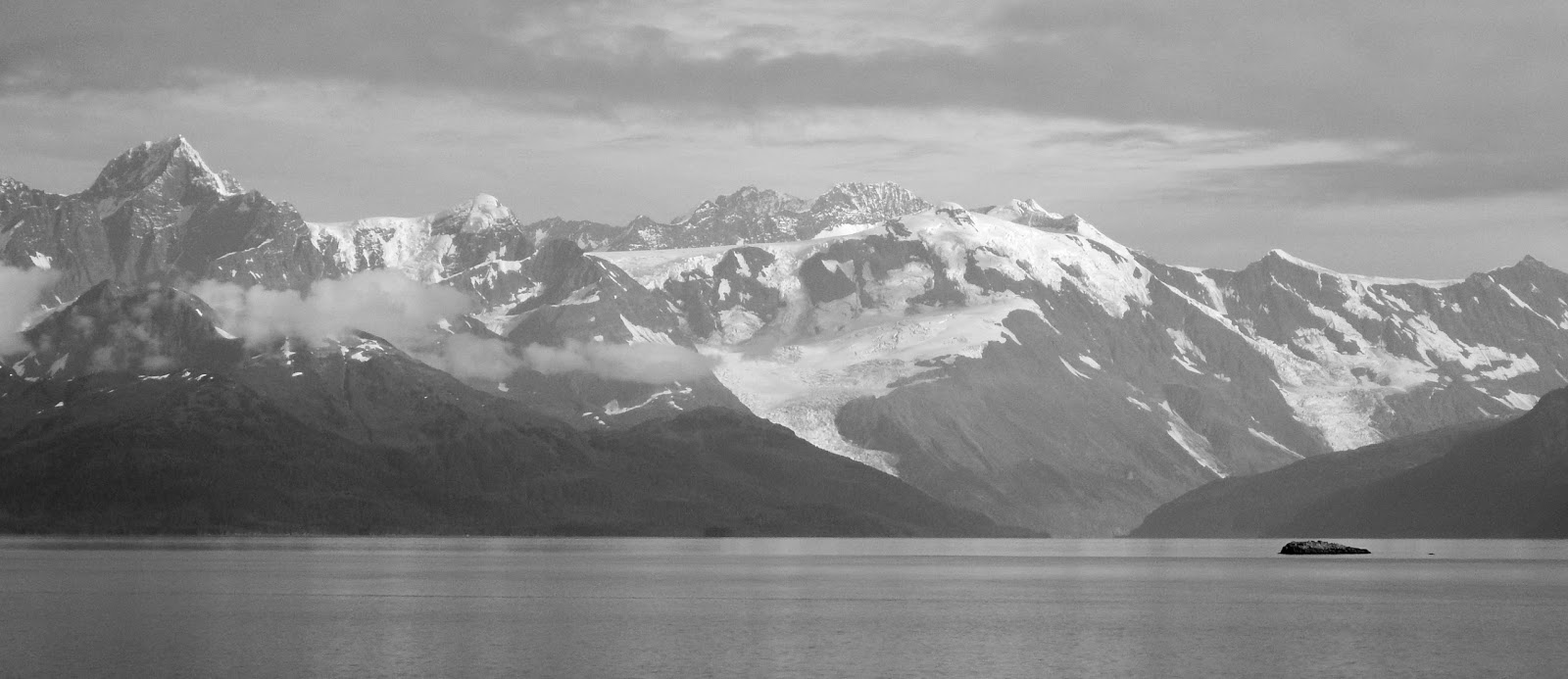
Looking north from Esther Rock, the entrance to College Fjord, Port Wells, is visible in the distance. Esther Rock means different things to different people. For the commercial fishermen, it is often the boundary of one of the salmon fisheries in the Sound. For others, it is a floating "internet cafe" of the Sound.
Glaciers are essentially mass balance problems - they transport snow and ice from higher elevations to lower elevations where it can melt. These Passage Canal glaciers extends over such a short elevation range; I love how even this minuscule change in elevation and distance is enough to produce ice dynamics. They are also rapidly disappearing.

Some people call those who live in Whittier WhitIdiots, those who live there part time are Half-Wits. But, how much of a dimwit can you be if you to choose live in a place that is not only so beautiful, but also has skiing 12 months of the year?

Located between Cordova and Montague Island, Hawkins Island guards the Sound from the Gulf of Alaska. I took this picture of the fog spilling over the Heney Range from the Gulf as we drove north past Hawkins Island.

If it had internet, Culross Cove would be our Captain's favorite anchorage in the Prince William Sound. With blue skies and temperatures in the seventies, we hiked to the top of Culross Island, complete with views of Culross Cove and the Chugach.

Just outside of Cordova, we watched these commercial fishing tenders float in and out of the fog of Orca Inlet as they waited for the next fishing period to open.

Waiting to head out to the Sound the next morning, we anchored in Orca Inlet, just offshore of Cordova. Bathed in Alpenglow, Mount Heney clashed with the industrial waterfront of Cordova.

After work one evening, we went kayaking from our anchorage in Eleanor Island's northwest bay. The days are starting to get noticeably shorter, and with the shorter days come seemingly endless and beautiful sunsets over the Sound.

I took this picture in the spring, but just stumbled across it this morning. Taken from our back deck, low fog hangs over Lake Eyak just after the ice finally broke up on the lake.

Driving out to the Alaganik Slough for a walk on a gray day, we saw these trumpeter swans. The swans, which can apparently fly at altitudes of 8 km, spend winter on the ponds, bogs and lakes of the Copper River Delta.


After heavy rain throughout the morning, the sky cleared delivering a beautiful sunset as we finished dinner in Port Fidalgo.

Dan and I went fishing for Dolly Varden Char up Ibeck Creek one evening last week. As we fished the marine layer rolled in and out of the Scott River valley.

Hoping to get a bird's eye view of the Sheridan Glacier, we hiked into the alpine on a July weekend. The marine layer limited the visibility to 1,000 meters, but it brought the color out of this dew-soaked wooly lousewort.

At 10:30 PM we watched the sun creep towards the horizon through the relic piles of the defunct Orca Cannery.

Our roommate Megan had the great idea of taking a couple canoes out to Sheridan Glacier's terminal lake. As we started the one mile portage it was raining lightly, by the time we left the lake a dense fog shrouded the ice.


Driving north out of Cordova, we watched these bald eagles fighting over fish in nearly perfect overcast light.


Headed back to Cordova, 40 knot winds slowed us as this bowpicker passed:

On our way back to the vessel after a day in the field, we stopped to refill our ice supply with blocks of glacial ice calved from the Chenega Glacier:


This pod of Dall's porpoise surfed on our bow-wake for an hour as we headed across the Sound:


No comments:
Post a Comment